Free Standard Shipping on orders $150+ • $6 Priority Upgrade Available

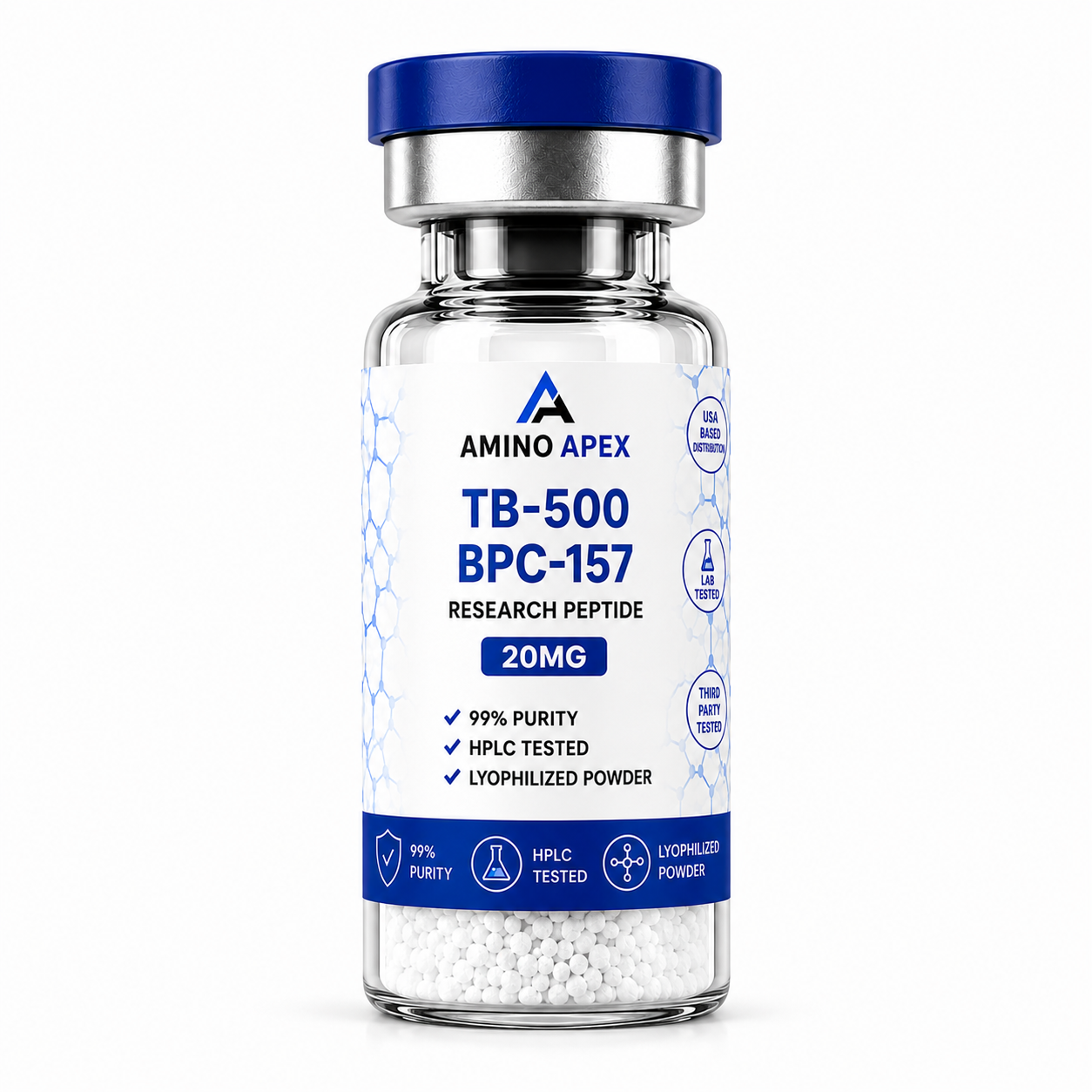
Batch ID
20BB926
Assay Purity (HPLC)
99.76%
QC Status
Pass
Analysis Date
09-02-2026
Product Overview
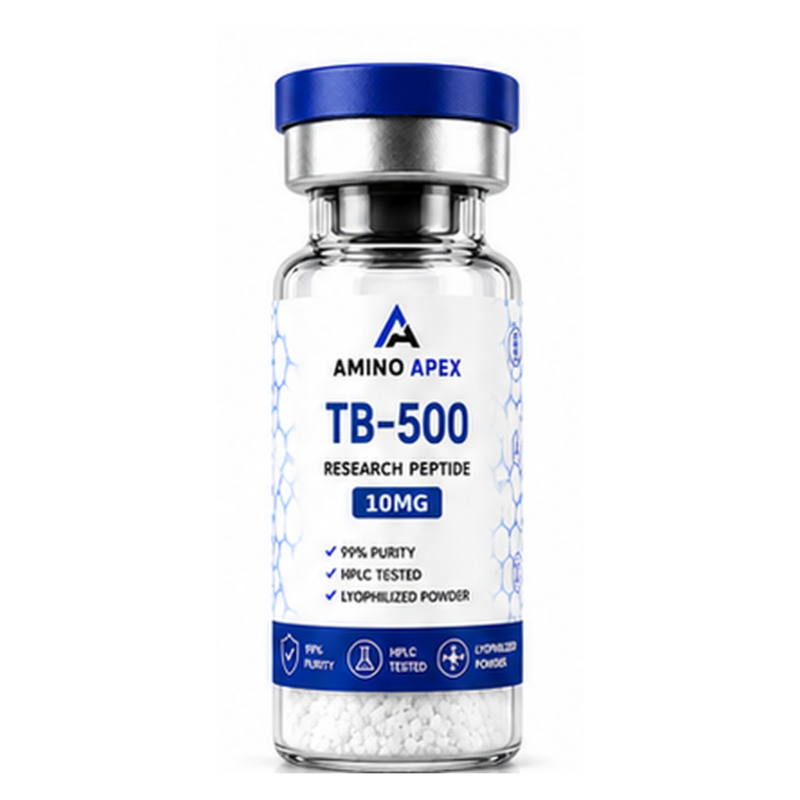
TB-500+BPC-157 20mg
Compound Overview
BPC-157 TB-500 20mg is a lyophilized research peptide blend supplied by Amino Apex for qualified laboratory investigation. The formulation contains two distinct peptide components, BPC-157 and TB-500, with different molecular characteristics and areas of experimental research. Batch-specific analytical testing provides information about the identity and measured content of each component.Thymosin Beta-4 is a 43-amino-acid actin-binding peptide investigated in research involving G-actin sequestration, cytoskeletal organization, cellular migration, endothelial behavior, and cellular motility.
BPC-157 is a 15-amino-acid synthetic pentadecapeptide investigated primarily in preclinical models involving endothelial signaling, nitric-oxide-associated pathways, cellular migration, fibroblast responses, extracellular-matrix processes, and angiogenesis-associated signaling.
Because the two peptides act through different molecular and cellular systems, the blend may be relevant to experimental designs examining multiple peptide-associated pathways within a single research system.
Scientific Research References: Published studies have examined the biological properties of Thymosin Beta-4 and BPC-157 as separate research peptides. These publications provide background information about the compounds and do not establish the molecular identity, combined effects, or clinical suitability of the Amino Apex BPC-157/TB-500 blend. Thymosin Beta-4 has been investigated in experimental research involving actin regulation and cellular migration. See the peer-reviewed literature on Thymosin Beta-4 and actin-associated cellular processes. BPC-157 has been investigated in preclinical models involving endothelial responses and nitric-oxide-associated signaling. See the peer-reviewed literature on BPC-157 and endothelial signaling.Molecular & Structural Research
The Amino Apex BPC-157/TB-500 20mg blend contains two separately identified peptide components. Batch-specific HPLC analysis reports BPC-157 and TB-500 identity and quantitation.Thymosin Beta-4 consists of 43 amino-acid residues with the sequence:
SDKPDMAEIEKFDKSKLKKTETQEKNPLPSKETIEQEKQAGES
Its molecular formula is:
C₂₁₂H₃₅₀N₅₆O₇₈S
with an approximate molecular mass of:
4,963 g/mol
A major structural feature of TB-4 is its actin-binding region containing the LKKTET sequence, which is associated with its interaction with G-actin and makes the peptide relevant to cytoskeletal and cellular-motility research.
BPC-157 consists of 15 amino-acid residues with the sequence:
GEPPPGKPADDAGLV
Its molecular formula is:
C₆₂H₉₈N₁₆O₂₂
with an approximate molecular mass of:
1,419.5 g/mol
The blend itself does not have a single molecular formula, molecular weight, peptide sequence, or CAS number because it contains two separate peptide molecules.
Research Applications
The BPC-157 TB-500 20mg research blend contains two distinct peptide components that may be investigated in appropriately designed laboratory studies involving the following molecular and cellular pathways:- Actin-associated cellular processes
- G-actin sequestration research
- Cytoskeletal organization
- Cell migration and motility
- Endothelial cell-response studies
- Angiogenesis-associated signaling
- Nitric-oxide-associated pathways
- Fibroblast-response research
- Extracellular-matrix investigations
- Collagen-associated cellular processes
- Cellular stress-response pathways
- Peptide structure-function research
- Comparative multi-peptide signaling
- Combined peptide characterization
- Analytical peptide research
These categories describe areas investigated in experimental peptide research and do not constitute therapeutic or clinical-use recommendations.
Preclinical Research Context
Both components have been investigated extensively in preclinical experimental systems, although their research histories and proposed mechanisms differ.
Thymosin Beta-4 research includes biochemical, cellular, and animal-model investigations focused on actin regulation, cytoskeletal dynamics, endothelial signaling, cellular migration, and related cellular-response pathways.
BPC-157 research consists predominantly of in-vitro and animal-model investigations examining endothelial responses, nitric-oxide-associated signaling, fibroblast activity, extracellular-matrix processes, and cellular migration.
Research involving a combination of these peptides should not be assumed to behave identically to studies examining either component individually. Findings depend on the experimental model, concentrations, assay design, timing, and laboratory conditions.
Analytical Documentation
Amino Apex provides batch-specific analytical documentation for tested lots. Individual lot documentation may include chromatographic purity analysis and other analytical information associated with the tested sample.
Because analytical characteristics may differ by production lot, the Certificate of Analysis for the applicable batch should be used as the source of measured purity and quality-control results.
For blended materials, the applicable COA should also be used to confirm the identity and composition of the individual components.
Refer to the COA panel on this page or the Amino Apex COA Library for available batch-specific analytical documentation.Storage & Laboratory Handling
This material should be handled only by qualified personnel using procedures appropriate for laboratory peptide materials.
Storage and handling should follow the conditions specified in the applicable product and batch documentation.
Experimental preparation, concentration, assay conditions, and analytical methodology should be established by qualified researchers according to the requirements of their specific laboratory system.
Research Use Only
For laboratory research use only.
This material is not intended for human or animal use. It is not intended for diagnostic, therapeutic, food, cosmetic, or household applications and is not intended to diagnose, treat, cure, prevent, or mitigate any disease or medical condition.
Lab Tested
Batch-specific testing
Verified COA
Lot documentation
Batch-Tested Purity
See current COA
Secure Packaging
Tamper-evident seal
Fast Shipping
Secure delivery
Research Use Only
Not for human use
Technical Specifications
Chemical Data & Compound Details
Product Name
TB-500+BPC-157 20mg
CAS Number
TB-500: 885340-08-9 / BPC-157: 137525-51-0
Molecular Formula
TB-500: C₃₈H₆₈N₁₀O₁₄ / BPC-157: C₆₂H₉₈N₁₆O₂₂
Molar Mass
TB-500: 889.01 g/mol / BPC-157: 1419.5 g/mol
Appearance
White to off-white lyophilized powder
Purity
99.76% — Current lot COA
Storage
Follow applicable product and batch documentation
Documentation
Batch-specific COA available
Intended Use
Laboratory research use only
Certificate Status
Pass

Questions About This Research Material?
Our support team can assist with questions regarding batch documentation, analytical specifications, COA availability, and laboratory storage information.
Qualified Support
Batch Documentation
COA Assistance
Core Standards
Why Choose Amino Apex?
Research Use Only
Supplied strictly for laboratory research and analytical applications.
Batch-Specific Testing
Analytical documentation is associated with individually identified product lots.
COA Documentation
Verified lot documentation is available through the Amino Apex COA Library.
Secure Fulfillment
Products are packaged securely and prepared according to our fulfillment procedures.
$105.00
$85.00
$35.00
$40.00
$49.00